Tuesday, October 10, 2017

Montana Fish, Wildlife and Parks supervisor retires, the latest development in agency shakeups

top story

Montana Fish, Wildlife and Parks supervisor retires, the latest development in agency shakeups
  • Updated
  • 2
Sam Sheppard
Sam Sheppard
Gazette file photo
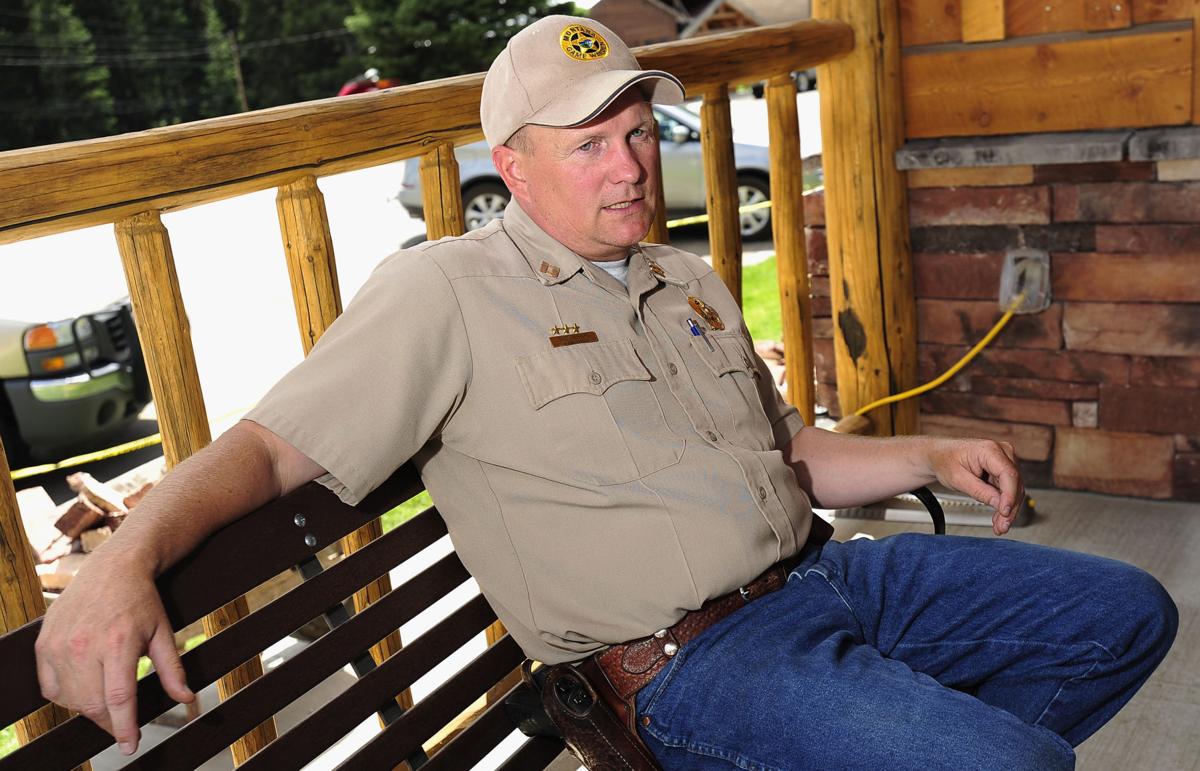
The supervisor for Montana Fish, Wildlife and Parks in Bozeman’s Region 3, Sam Sheppard, has retired after less than three years on the job.
Sheppard’s retirement was announced in a short email from chief of Operations Mike Volesky that was sent to Region 3 wardens on Wednesday. The Billings Gazette obtained a copy of the email from the warden’s union representative, Sam Christiansen, who is a labor specialist for the National Fraternal Order of Police.
“Everyone is happy he’s gone,” Christiansen said. “But they wish he would have been terminated instead. We wanted blood in the water, but it’s good that he’s no longer there.”
Volesky would provide no further details on the retirement other than to say, “There were some personnel issues involved, but I’m not going to comment.” 
A voicemail left for Sheppard seeking comment was not returned. A second attempt to reach him found the number disconnected.

Chain of events

Sheppard’s retirement is the latest in a string of FWP administrative changes that have altered leadership within the agency. 
In the past year alone the department has dismissed its Montana State Parks chief, and paid him a settlement amount the department is unwilling to reveal to the public; demoted the Fisheries Bureau chief, who then left the agency; demoted its chief law enforcement officer while keeping his pay the same and placed another candidate in the position. 
Sheppard’s retirement also comes on the heels of Montana Gov. Steve Bullock clashing with the head of the State Parks and Recreation Board, Tom Towe, who was dismissed for taking a stance opposite of the governor on a parks bill before the last Legislature.

Worked up

Sheppard, a Montana native, had worked his way up from the enforcement side. Before his promotion to supervisor, Sheppard was the Region 3 warden captain.
When Sheppard's promotion to supervisor was announced in 2014, four state sporting groups complained to FWP's administration, saying someone with a biology background should have been hired. The groups also questioned questioning the hiring process, saying it was rigged to favor Sheppard.
The southwestern Montana district is known as one of the toughest in the state because of the variety of hot-button issues it deals with, everything from species like grizzly bears and wolves, to diseased elk and the threat they pose to cattle ranches in the area.
That tension extended to relations inside the Region 3 office. In a 2015 letter from Region 3 warden Jennifer Knarr to fellow wardens, a copy of which was obtained by The Billings Gazette, she described a Bozeman workplace fraught with tension between wardens and supervisors. In the letter she warned other wardens to be careful about what they wrote, and to record any conversations with superiors to protect themselves from retaliation after she said one of her emails was forwarded to supervisors.
"She complained about her supervisor (Sam Sheppard) in Bozeman to me specifically," said Joe Kambic, a Region 2 warden who is their union representative. "She was having a tough time. She reached out to the union for help."
He passed her complaints on to then-director Jeff Hagener and then-chief of Enforcement, Tom Flowers.
Flowers said he met with Knarr and her husband, fellow warden Joe Knarr, about their complaints in October 2015, then passed the issue on to Human Resources.
“I beat myself up almost every day for not taking a different tack on that,” Flowers said.
"It probably was handled wrong," Kambic said.
In March 2016, Region 3 was rocked when Jennifer Knarr shot her husband along with her 6-month-old son before killing herself at the family’s Belgrade home. At the time, Gallatin County Sheriff Brian Gootkin said he had spoken with family members who said Jennifer Knarr had been battling post-partum depression.

Note to staff

Stung by the double homicide and suicide, Flowers wrote an email to the division’s staff in 2015.
“Coupled with this, and in the last couple of years, the Enforcement Division has encountered some very challenging and debilitating situations,” Flowers wrote. “As a Division we are faced with (but more importantly have the ability to make) a choice. Do we resign ourselves to these difficulties? Or do we coalesce and become stronger as a unit? How we all react, how we interact with each other, how we adjust and how we portray our professionalism will define who we are in the future. As we have faced increasing scrutiny from outside interests, our resolve has been tested. How we survive this will be our legacy for some time to come.
“Should we fail at this, we will be haunted for much longer…”
The email went on to criticize any wardens who may have pointed fingers at other personnel over the murder-suicide calling it unethical, unprofessional and that such conduct would not be tolerated.
It was Flowers who was removed from his position as chief of law enforcement in January, a division he had been hired to heal. He was replaced by Dave Loewen, who had filed a grievance over the agency’s hiring of Flowers as chief, a job which he sought and eventually won.
This was after FWP Director Jeff Hagener had retired in December. Gov. Bullock appointed Martha Williams to replace Hagener. She was approved by the Legislature in April.
+2 

Williams
Williams told the Flathead Beacon last month, “One of my goals is to unify the agency and look forward, and in moving forward to really value all employees.”

Region 3 kerfuffle

Other employees had also complained about the Region 3 work environment. According to Christiansen, the wardens’ union representative, another complaint was lodged with FWP officials in July. Following that grievance, more than 20 people from the region were interviewed by FWP’s Human Resources division.
Around the same time Sheppard was placed on administrative leave, according to three FWP sources who feared going on the record out of concern about reprisals.
“We would never comment on administrative leave; that's a personnel issue,” said Volesky, FWP’s operations chief. But he did note that a series of FWP employees will be acting supervisors until Sheppard's position is filled.

The gathering

Last week, FWP director Williams and Volesky gathered Region 3 staff to report that Sheppard was going to be reassigned to a newly created state bison coordinator position, sources said. That prompted an outcry from some Bozeman personnel, in part because FWP had eliminated the position in 2015 and suggested demoting the bison expert at the time, Arnold Dood, a veteran agency biologist. Rather than take the demotion, Dood retired.
Christiansen said the proposed reassignment angered some of his union members because Sheppard would still be involved with many of Region 3’s staff, since most of the state’s bison issues are located in that area of southwestern Montana, which abuts Yellowstone National Park.
“My view is always to work with management and solve issues rather than complain,” Christiansen said. But that’s been difficult since director Williams has yet to meet with him, he added.
“Sam Sheppard is the first name I heard since those guys signed with us” a year and a half ago, Christiansen said. Prior to that, the wardens were represented by the Montana Public Employees Association before a caustic break with that group.
Volesky said Sheppard had been reassigned to his new position for a short time before he announced his retirement effective immediately. There was no settlement involved, Volesky added.

Looking ahead

Flowers has challenged his demotion from chief of law enforcement in district court in Helena, although he continues to work for the agency’s investigative division. He still hopes to get his old position back and finish a job he started — trying to smooth relations between the enforcement division and management.
It was a task Hagener was assigned to deal with when Gov. Bullock asked him to return as FWP director in 2012.
“When I interviewed with Gov. Bullock and (then-chief of staff) Tim Burton to come back (in 2012), they told me that one of the critical issues they saw with the agency was the enforcement division,” Hagener testified in the Board of Personnel Appeals hearing. “They had what you might call heartburn with the enforcement division. They said, ‘Jeff, you need to do what you can to bring them back into the agency … and be a positive force.’”
Flowers was Hagener’s pick for chief of law enforcement to heal the division, but FWP did not challenge Flowers’ removal in the decision handed down by the Board of Personnel Appeals investigator, an act that left Flowers feeling abandoned by his own department.
Instead, after Hagener had retired, three FWP administrators (including Volesky) who were serving as acting directors moved Loewen from Region 3 warden sergeant into the chief’s position. They also could have installed Loewen as assistant chief or challenged the decision to remove Flowers.
Despite all of the hassle and heartbreak, Flowers wants the chief’s job back.
“I think there’s a bigger problem, and if I go away, it doesn’t solve the problem,” he said.

FWP eyes replacing snarling griz logo

top story

FWP eyes replacing snarling griz logo

  • Updated
  • 3
100717 mfwp griz logo.jpg
Is the grizzly bear headed for extinction as the emblem of Montana Fish, Wildlife and Parks?
A branding committee of FWP employees is considering a new version of the bear that has snarled from their shirt sleeves, letterheads, signposts and pickup trucks since World War II.
Reproducing the logo and type face is problematic in the digital media world, said Vivaca Crowser, who’s on the 15-member statewide panel.
“We’ve looked at a variety of things, everything from keeping it as is, changing it completely or trying to clean it up so it reproduces better,” said Crowser, information and education manager for FWP’s Missoula-based Region 2.
It’s one of a number of ideas as the agency looks to bring “consistent new visual guidelines” to its brand, Crowser said. They’re ideas combed from staff and public listening sessions around the state in the summer of 2015 under ’15 and Forward. The initiative was aimed at updating the agency vision and goals for the succeeding 10-plus years. 
But the prospect of a different logo doesn’t sit well for some, who argue that the current one is among the most recognizable logos in the American West.
“I’m extremely disappointed that our old logo might be going away,” FWP biologist Shawn Stewart of Red Lodge wrote in a recent letter to the agency. “I would appreciate the committee’s consideration of some of the values our current logo has represented historically and still represents today.”
“I’m very opposed to what they’re doing,” said Terry Lonner of Bozeman. “I’ve seen the proposed logo that they’re thinking about to rebrand the department, so to speak. It’s just a silhouette type of thing, and it doesn’t have any history behind it.”
Lonner retired from FWP in 1998 as chief of wildlife research after nearly 30 years with the department. In 2005 he produced the documentary “Back From the Brink: Montana’s Wildlife Legacy” for FWP, then teamed up with Harold Picton on a book, “Montana’s Wildlife Legacy: Decimation to Restoration.”
The story of the bear that came to represent the department dates back 75 years.
In 1942, Lloyd “Mac” McDowell and Marshall Moy, both Montana Fish and Game field men, were traveling by horseback on a moose survey in the Absarokee Wilderness northeast of Gardiner. A huge silvertip appeared on the trail and stopped not 75 feet ahead. It seemed ready to charge as McDowell, on the lead horse, quickly dismounted, grabbed his .270 rifle from the scabbard and shot the bear, breaking its front shoulder.
“He let out a large roar and lunged forward toward me, but rolled sideways off the trail,” McDowell recalled in a letter he sent to his daughter, Mitzi Stonehocker of Thompson Falls, a couple of years before his death in 1999.
McDowell said he reloaded and followed the bear down the mountainside through heavy brush.
“When I caught up to him, he was going in circles and clawing everything in sight. It took three more shots before I got in a killing one to the base of his skull,” McDowell wrote.
There was a “rogue bear” in the country at the time. It had gotten through a trap door into the root cellar at Hellroaring Cabin but couldn’t fit out the same way. “When he decided to leave he just pushed the whole floor up and made a new exit,” McDowell said.
In another instance, the bear couldn’t get through a bear-proof door barred by old crosscut saws nailed to it, but tore a paw and apparently ripped a claw out trying. He climbed on the roof and tore a hole large enough to get inside.
The bear McDowell killed measured seven feet long and weighed an estimated 600 to 700 pounds. It had a missing claw and a cut paw.
The grizzly wound up hanging on McDowell’s office wall in Helena, where its menacing fangs and a distinctive crooked jaw caught the eye of a department official in 1943. Hector LaCass, a draftsman, produced a lifelike drawing of it, including the curved jaw, that was adopted by the agency as its first official logo.
Lonner pointed out that Montana has since designated the grizzly bear as its official state animal.
“The grizzly is really a solid symbol of wilderness, just because of their need for a lot of room to roam and live,” he said.
Stewart said when the logo was adopted in the 1940s it was said to “commemorate the early workers and their efforts to conserve Montana’s wildlife resources.”
“That sentiment remains valid,” he said in his letter. “To me the logo is a strong representation of ‘recovery.’ Certainly as we see the grizzly being delisted in the Yellowstone ecosystem the logo is a great representation of current recovery. But recovery is a huge part of the story of many wildlife species since 1942 — not just the grizzly bear.”
Stonehocker said hers remains a family of Montana hunters. She keeps a close eye on the bearskin that symbolizes so much about the state and its conservation history. She’s collected an assortment of memorabilia in association with it, including the plaster taxidermy mold that her father used as an ashtray for his pipe.
“Everywhere I take it they go wild,” Stonehocker said of the bearskin exhibit.

After all these years it needs about $2,500 worth of work, she figures. She’d like to take it back to Jonas Brothers Taxidermy in Colorado, which made the original mount all those years ago.
She’s offered it to Fish, Wildlife and Parks but said the department wasn’t interested.
“I’m 63, and I really want that bear placed before I die,” said Stonehocker, who’s retired but says personal and family health issues are a priority.
“I just don’t have the right connections yet, and I just don’t have the time.”
As for the logo, Crowser stressed that no decision has been made and may not be finalized for up to six months. Recommendations on anything the branding committee is working on will be sent to director Martha Williams’ office in Helena for final approval.
Cost of a change in logo is a consideration, though Crowser said it’s too early to put a price tag on it. A changeover wouldn't be a one-shot deal but phased in as vehicles and uniforms are replaced. 
“We want to make a decision that is responsible budget-wise. That's a big concern,” she said. “Without having a decision in hand or anything, and not knowing whether it would be phased in over months or even years, it’s just hard to say.”
While FWP faces its own cuts, it hardly taps the state general fund and thus is not as affected by the current budget crisis as other departments.
The bulk of FWP programs are funded with hunting and fishing license fees and excise taxes on guns, ammunition and fishing equipment.

FWP supervisor retires after internal investigation


Comments (2)

Newest First


Preview Post Comment…
I would like to say that I am surprised by this news, but I'm not. I am a former FWP region 3 employee who became disgusted with Sheppard's management and quit when it became apparent that his allegiances were not in support of Montana's sportsmen and that his treatment of his staff was indicative of a world class narcissist. The only surprise I see here is that FWP is finally dealing with the monster they created. Although I understand Mr. Vinnedge's frustration that the new director is a lawyer, I would point out that shortly after her appointment she began tackling this issue as opposed to ignoring it as happened under previous administrations.
Preview Post Reply
I had the privilege of serving Montana's sportsmen and women for 30 years. I retired June '14 and seeing the agency decline has been my greatest sadness. For the first time in history, FWP is run by people with no fish, no wildlife, and no parks experience. A lawyer is the director. Her # 3 is an accountant and #4 is a computer techie. Appropriately, #2 is Mike Volesky, who slithered out of Governor Schweitzer's office during Joe Maurier's tenure as Director. He is responsible for the illegal dismissal of Chief of Enforcement Flowers and for protecting Sup. Sheppard's career despite his reprehensible behavior. It is going to take a lot of healing to fix this poor broken agency.
Preview Post Reply


Tuesday, October 3, 2017

NWF Sportsmen and Conservation

The Land Privatization Movement Is Alive and Well

The stories come in, one after another, about the “retreat of the land grabbers.” The latest is a piece by the good writer and journalist Jimmy Tobias, called “Another Loss for the Land-Grab Campaign,” May, 2017 issue of the Pacific Standard Magazine. Tobias notes that Nevada’s Congressional Representative Mark Amodei, one of the leaders of the anti-public lands movement had withdrawn his bill HR 1484, called the Honor the Nevada Enabling Act (a strange name for his bill since the actual Nevada Enabling Act of 1864 clearly states that all undistributed public lands would remain in the hands of the federal government, but no history, no agreement, no fact, ever stands in the way of those who are obsessed with taking public lands for themselves and their masters). Amodei’s failed bill called for the transfer of an initial 7.3 million acres owned by the American public, with millions more acres to follow, “on request of county or state governments.”
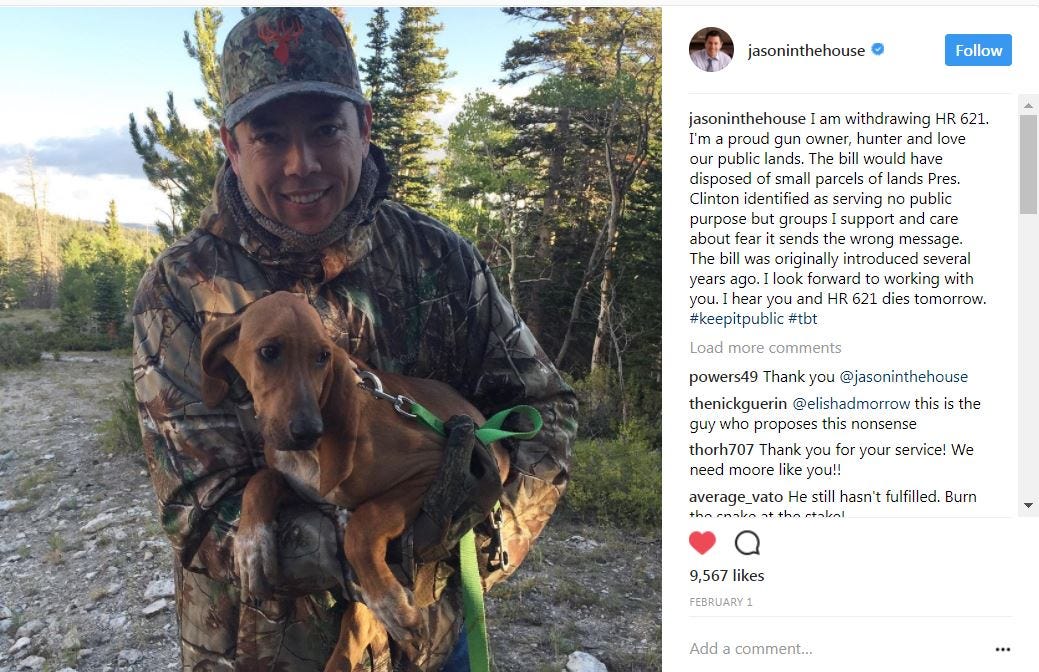
In February of 2017 newspapers across the nation covered the collapse of Utah Representative Jason Chaffetz’ H.R. 621, a bill that commanded the Secretary of the Interior to sell-off over 3.3 million acres of public land, after a concerted outcry of rage from hunting and fishing conservation groups. Chaffetz wrote on social media, “I am withdrawing HR 621. I’m a proud gun owner, hunter and love our public lands. The bill would have disposed of small parcels of lands Pres. Clinton identified as serving no public purpose but groups I support and care about fear it sends the wrong message…”
The wrong message, indeed.

Do Not Be Fooled

Even as fishermen and hunters and other public lands advocates celebrate what looks like a victory, the message of state control and privatization of public lands is pounding away, powerful and alive as ever, like the tell-tale heart in the old Edgar Allen Poe story of murder and guilt. While the land grabbers may have made a strategic withdrawal for the moment, there is no evidence- zero- that any of them have changed their minds or their goals.
The land privatization movement is alive and well and led by well-funded and highly motivated groups like the American Lands Council (whose campaign is called, shamelessly, “Free the Lands!” as if somehow the lands where we fish and hunt and roam with our families- the lands that are our birthright as American citizens- were somehow held in bondage by evildoers). Utah state representative Ken Ivory, a former director of the American Lands Council, told reporters that the takeover of public lands by the states was “like having your hand on the lever of a new Louisiana Purchase,” without ever noting that the original Louisiana Purchase cost the US $15 million in gold (about $450 million in today’s dollars) and a willingness to engage the Emperor Napoleon in outright war, nor did he mention that the Treaty of Guadalupe Hidalgo, under which Mexico ceded much of the rest of the West to the US, cost millions in gold and uncounted lives on the battlefield. Rep. Ivory, apparently, expects for Americans to simply give him and his cronies these lands, bought with our own blood and treasure, for free.
The equally-well funded corporate front group the American Legislative Exchange Council (ALEC) writes boilerplate bills that are then carried to state legislatures and to Congress by willing or gullible lawmakers. ALEC authored this doozy, called the “Disposal and Taxation of Public Lands Act,” which says
“(1) On or before December 31, 2014, the United States shall: (a) extinguish title to public lands; and (b) transfer title to public lands to the state.”
The current Republican Party platform makes their plan absolutely clear, saying, “It is absurd to think that all that acreage must remain under the absentee ownership or management of official Washington. Congress shall immediately pass universal legislation providing for a timely and orderly mechanism requiring the federal government to convey certain federally controlled public lands to states.”
The catchwords here are “state control” or “transfer the lands to the states.”
All the available evidence and all historical precedence support the fact that if federally-managed public lands are transferred into state control, the lands will be sold. “Transfer to state control” is pure con-man double-speak for inevitable privatization of our public lands.
This movement to divest Americans of our public lands is based upon a simple, grim arithmetic: our lands, from the smallest, most lush National Forest in Mississippi to the tens of thousands of arid Western acres managed by the Bureau of Land Management, represent the largest and fattest cash cow left on the planet today. As the old-school humorist Will Rogers once noted, “buy land, they aren’t making any more of it.” Rogers, were he alive today, might say it differently: “If you have millions of acres of lands that belong to all Americans, you better make dang sure you know how best to keep it.” Because the hyenas are at the gates, and they are hungry, and they are shameless.
How can we keep our birthright, even as the population of the world in 2050 approaches 9 billion souls, and the population of our country- which has more than doubled in the past fifty years- adds another 50 or 100 million or more? How can we make the irrefutable argument that these lands’ highest purpose is to remain in public hands? How can we win this battle for the future of our nation, and the natural landscapes, the hunting and fishing and freedom that makes our country the envy of the world?
First, we must stop taking our public lands for granted. For decades many of us seemed to take pleasure in bashing the federal agencies charged with managing our public lands. Ranchers were furious at the BLM, loggers railed against the US Forest Service, hunters resented road closures, fishermen claimed that too much logging was ruining fisheries, mill owners and loggers claimed that environmentalists had “locked them out” of the forests. Environmentalists claimed that land managers were destroying the very ecosystems they were charged with managing, by prioritizing livestock, mining, or logging.
We all thought that the public lands were always going to be there, and that we had the luxury of complaining and ranting endlessly about their management without offering concrete, collaborative solutions to the conflicts. Now, we know that those conflicts, and that lack of engagement on our part, are being used by the most venal among us to convince us to simply give away our birthright.
Two, we must recognize that the conflicts over public lands management are real, and that anger over public lands management is, at least sometimes, based on poor management decisions, top-down decision that don’t reflect real conditions on the ground, real problems and lack of knowledge, and/or a lack of adequate personnel in federal agencies. The stereotypes of anti-federal fury sometimes have a basis in reality: yes, environmentalists have almost certainly filed too many lawsuits, and public land managers have indeed let loggers cut down too many trees, or livestock grazers graze too many cows or sheep, in the wrong places at the wrong times.
None of this means that our public lands should be given away or sold. It means we need to solve the conflicts, because the evidence is that whatever outcome would arise from state control and/or privatization, it wouldn’t be better than what we have now. The conflicts might end. But that peace would come because there would be nothing left to argue over.
Three, we as a people need to understand that the system of American public lands is a cornerstone of our Republic, no less crucial than the Bill of Rights, or the fiery and noble ideas in the Declaration of Independence. The public lands were set aside, beginning in 1892, to solve specific problems that had plagued and ruined lesser nations since the dawn of civilization- soil erosion, overgrazing, loss of timber resources, privatized water sources, silted river systems. The ecosystem services these lands provide now are almost certainly incalculable on any economic scale — the snowpack held in public trust in high mountains, the floodwaters soaked up by the eastern and southeastern forests, the healthy, soil-building grasslands in the arid west. Always, the simple yet utterly unique notion of 640 million acres held in common by every American is as critical to our future as any treasure that we have, as critical as petroleum or natural gas or minerals (which are also produced on public lands) or the notion of equal justice under the law, or a an honest days’ wage for an honest days’ work. The poorest among us has the same right to hunt elk on the Lewis and Clark National Forest in Montana as a multi-billionaire. The richest among us can suffer beneath the Nevada desert sun, or revel in the spring snow on a Colorado peak, or hunt turkeys in the Sipsey Wilderness of Alabama, without spending a dime of their fortune, and they can greet the rest of us there, on a landscape that we all own together. It is as sane and honest an approach to a world gone awry as the ideas and works of our Founding Fathers, and keeping it intact is just as important to our future.
Right now, anti-public lands lawmakers are strangling federal land management budgets, making on-the-ground work impossible, and making conflicts with public land users inevitable. The same lawmakers then point to the lack of effective management on our public lands and say “See, nothing is getting accomplished, just as we said! Everyone is angry! This is why we must get rid of your lands!”
When the critical role of our public lands is understood by a majority of Americans, pressure can be put upon Congress to prioritize funding for federal land management agencies on a par with the importance of the work they accomplish. As accomplishments mount, the current anti-public lands firebrands in political offices will find themselves marooned in irrelevancy, with a shrinking constituency of listeners, braying their con-games at empty rooms.
None of this is impossible. What have we been given? The world’s most spectacular gift- a landscape vast enough to match the aspirations of its people, quiet woods and raging waters, snowfields and deserts and prairies replete with wildlife, room for roaming, for hunting, fishing and teaching our children the verities of existence on this vibrant planet. It is recorded in the 1906 American Historic Review that a lady once asked Dr. Benjamin Franklin whether he and his colleagues had created a monarchy, or a republic. Dr. Franklin responded, “A republic, madam, if you can keep it.” The same can be said of our public lands- we have inherited the freedom of some of the best ideas our forefathers and mothers ever had- now we will find out if we are tough enough, smart enough, far-sighted enough- to keep it.

Take action for your public lands today and tell your representatives public lands are not for sale.

Hal Herring is an award-winning journalist and contributing editor at Field and Stream magazine.has been writing about conservation, environment, hunting and guns for the past twenty years, and is a contributing editor at Field and Stream magazine. A lifelong outdoorsman, mountaineer, hunter and fisherman, Hal is based in Augusta, Montana.

Friday, September 29, 2017

U.S. Senate candidate charged with nine Montana hunting violations

 Bozeman Chronicle

U.S. Senate candidate charged with nine Montana hunting violations
Troy Downing
Troy Downing
Courtesy Troy Downing
A Big Sky businessman seeking the Republican nomination to run against U.S. Democratic Sen. Jon Tester in 2018 is facing seven misdemeanor charges accusing him of trying to buy Montana resident hunting or fishing licenses as an out-of-state resident.
Troy Downing was cited July 21 seven times for unlawful purchase of or apply for resident license by nonresident. He was cited an eighth time for transferring a hunting license to another person and a ninth time for assisting an unqualified applicant in obtaining a hunting license.
Downing pleaded not guilty to the charges at an Aug. 23 appearance in Gallatin County Justice Court. The dates of the violations range from Nov. 11, 2011, to June 16, 2016. The citations did not include a court affidavit, and Montana Fish, Wildlife and Parks officials would not release the residential license requirements Downing is accused of violating.
Christopher Williams, a Bozeman attorney representing Downing, said the Republican candidate would not comment because of the pending charges.
“He’s confident that these violations are an administrative oversight that will be resolved in his favor once he’s had an opportunity to make his case,” Williams said.
Andrea Jones, FWP spokeswoman, confirmed the case against Downing and the ongoing investigation.
Downing’s citations accuse him of illegally buying licenses in 2011, 2012, 2013, 2014, 2015 and 2016. The citation for transferring a license accuses him of loaning a 2011 Montana elk license to another for killing a bull elk. And the citation for assisting an unqualified applicant accuses him of helping his nonresident adult son obtain a 2015 Montana resident conservation, deer and elk licenses.
Kathryn QannaYahu, who writes an environmental newsletter called Enhancing Montana’s Wildlife and Habitat, first reported the case against Downing on a blog after receiving court documents from an open records request.
A person must live in Montana for 180 days prior to buying a resident hunting and fishing license. The person also must register a vehicle in Montana, file state income tax returns as a resident, and not possess or apply for any resident hunting, fishing or trapping privileges in another state.
Downing is scheduled to appear in Gallatin County Justice Court on Nov. 15 at 1:30 p.m. for a status hearing.
Downing is seeking the Republican nomination along with State Auditor Matt Rosendale, state Sen. Albert Olszewski of Kalispell and Belgrade businessman Ron Murray. Downing’s campaign chair is Lola Zinke, wife of U.S. Secretary of Interior Ryan Zinke.

Monday, September 11, 2017

Tom Jacobson Award


Mighty Mo Brewing Company
 is hosting the Montana Wildlife Federation for an Ales for the Outdoor event. Every beer you buy helps support Montana's wildlife, habitat, access, public lands, and hunting & fishing heritage.

Additionally, we will honor Representative Tom Jacobson with an award to recognize his contribution this last legislative session to finding collaborative solutions to contentious fish and wildlife issues and promoting our outdoors heritage.

So join us for good people, great beer, and a worthy cause.

-- 
Nick Gevock
Conservation Director
Montana Wildlife Federation                        
5530 N. Montana Ave
PO Box 1175
Helena, MT 59602
Toll Free: 800.517.7256
Phone: 406.458.0227


Thursday, August 3, 2017

Two Montanan Republicans Concerned With Daines' Actions Over Crazy Mountain Public Lands Access


7/31/2017 Daines' actions in Sienkiewicz case are despicable

"I am a 68-year-old native of Montana. I am also a lifelong Republican. Sen. Steve Daines' involvement in the Forest Service Ranger Alex Sienkiewicz case is not only despicable, but also deplorable..."


7/31/2017 Daines tramples Montana's outdoor heritage
"Sen. Steve Daines has shown his true colors, and I’m sick and tired of his acting on behalf of special interests like those on the east side of the Crazies. Daines has finally shown that he's totally against Montana hunters. His record since he's been in Congress has consistently been awful for conservation — defunding land and water funds, voting against clean water and pushing for massive logging over everything else on public lands.But now he's taken it a step further. Recently, Daines wrote to the secretary of agriculture, joining several landowner and ag groups' crusade against a forest ranger who was working to maintain a public easement into the Crazy Mountains."