FOR IMMEDIATE RELEASE: Contact Greg Lemon, 444-3051 Nov. 15, 2017
Testing confirms CWD in mule deer buck from south central Montana
A second test on a tissue sample from a buck harvested in hunting district 510, south of Billings, has come back positive for chronic wasting disease.
This buck was harvested Oct. 22 about 10 miles southeast of Bridger. Initial testing received by Montana Fish, Wildlife and Parks last week showed the animal was suspect for CWD. A second sample from the buck was sent to Colorado State University for follow up testing.
“These were the results we expected,” said Barb Beck, FWP Region 5 supervisor and CWD incident command team lead. “Fortunately, we have a well-thought out response plan that will guide our steps moving forward.”
The first test of a sample from a second buck was reported back as suspect on Tuesday. This buck was harvested on Nov. 5 about 3 miles south of Belfry, also in HD 510. A second sample from the animal is currently undergoing confirmation testing. Those results are expected next week.
In response to these detections, FWP director Martha Williams established an incident command team on Nov. 7. The team is comprised of FWP staff and representatives from the Montana Department of Health and Human Services, Montana Department of Livestock, Montana Department of Environmental Quality, and Crow Nation.
The incident command team is implementing a response outlined in FWP’s CWD Response Plan, which is currently out for public comment. The plan calls for establishing an initial response area for the purposes of a Special CWD Hunt. This hunt, should it occur, would need to be approved by the Montana Fish and Wildlife Commission and would be held after the general hunting season. The goal of the hunt would be to harvest enough mule deer to establish disease prevalence and distribution.
For Hunters
Though there is no evidence CWD is transmissible to humans, it is recommended to never eat meat from animals that appear to be sick or are known to be CWD positive. The Centers for Disease Control and Prevention recommends hunters who have harvested a deer, elk, or moose from a known CWD-infected area have the animal tested prior to consuming it. If hunters harvest an animal that appears to be sick, the best thing to do is contact FWP and have the animal sampled.
Some simple precautions should be taken when field dressing deer, elk or moose:
Wear rubber gloves and eye protection when field dressing.
Minimize the handling of brain and spinal tissues.
Wash hands and instruments thoroughly after field dressing is completed.
Avoid consuming brain, spinal cord, eyes, spleen, tonsils and lymph nodes of harvested animals. (Normal field dressing coupled with boning out of a carcass will essentially remove these parts.)
Montanans need to remember that Montana law prohibits the import of heads and spinal columns of deer, elk or moose harvested in states or provinces that have CWD in wild or captive populations.
Additionally, hunters who are concerned about whether the deer, elk or moose they harvest is infected with CWD should have the animal tested. If the animal was harvested in the priority surveillance area, the sampling can be done at one of the check stations operated in Big Timber, Billings, Columbus, Laurel, or Lavina on Saturdays and Sundays during the general season or at the FWP Region 3 office in Bozeman or the Region 5 office in Billings. If the animal is harvested outside the priority surveillance area, hunters can follow the directions on the web atfwp.mt.gov/CWDto take and submit their own samples for testing.
Background
The area where the suspect and positive samples were discovered is part of the FWP priority CWD surveillance area. FWP staff are collecting samples from hunter-harvested deer in south central Montana hunting districts. Most samples are collected at check stations and hunters receive a card with a sample number used to check test results. FWP is encouraging hunters who harvest deer within the priority CWD surveillance area, and especially hunting districts 502 and 510, to submit their animals for testing. If this is not done at a check station, hunters can call or come to the FWP Region 5 office on Lake Elmo Drive in Billings at 406-247-2940 from 8-5 weekdays.
CWD is a progressive, fatal disease affecting the central nervous system of mule deer, white-tailed deer, elk and moose. It is a slow-moving disease. However, left unmanaged, it could result in long-term population declines within affected herds.
Congressman Gianforte, GOP vote to gut the Wilderness Act
GEORGE NICKAS
The rugged beauty inside the Bob Marshall Wilderness Complex near Seeley Lake. TOMMY MARTINO
One
thing most Montanans agree on is we love our nationally acclaimed
wildernesses and don’t want to see them harmed. Whether we hike, fish,
hunt, ride horsepack or just stand in awe of these wild gems, Montana’s
designated wildernesses are the pride of our state. We might fight like
hell over whether to designate this area or that one as new wilderness,
but the Bob Marshall, Scapegoat, Selway-Bitterroot, Absaroka-Beartooths
and our other protected wildernesses are sacred to Montanans of all
stripes.
That is,
apparently, all stripes except U.S. Congressmen Greg Gianforte, who just
voted to effectively repeal the Wilderness Act and open places like
“the Bob” to endless forms of habitat manipulation, predator control,
road-building and anything else that might be construed as benefiting
“hunting, angling, recreational, shooting, or wildlife conservation.”
This
stealth attack on the Wilderness Act comes in the form of H.R. 3668,
the Sportsmen’s Heritage and Recreational Enhancement (SHARE) Act,
introduced by Rep. Jeff Duncan of South Carolina. It would affect every
wilderness in the nation, including all of Montana’s wilderness gems.
By
nearly unanimous vote, Congress passed the 1964 Wilderness Act in order
to protect America’s wildest landscapes. The law describes wilderness
as “an area where the earth and its community of life are untrammeled by
man... retaining its primeval character and influence, without
permanent improvements or human habitation, which is protected and
managed so as to preserve its natural conditions.” The Wilderness Act is
essentially nature’s Bill of Rights, places where we humans, out of a
sense of respect, humility and foresight, have agreed to let nature be.
Since passage of the Wilderness Act, the National Wilderness
Preservation System has grown to include 110 million acres in more than
760 units.
The SHARE Act would turn the
Wilderness Act on its head, allowing endless habitat manipulation and
modification, including logging, chaining, herbicide spraying or myriad
other offenses done under the guise of “wildlife conservation” or for
providing hunting, fishing and recreational shooting experiences. While
such management might be fine for a Texas game farm, they represent a
dramatic change for the Wilderness Act, which for over 50 years has
required the preservation of wilderness character as the top priority
for public wildernesses.
The
SHARE Act would also allow the construction of “temporary” roads, dams
or other structures in wilderness, again if done under the guise of
benefiting hunting, angling, recreational shooting or wildlife
conservation. And all such projects would be exempt from any
environmental review or public scrutiny under the National Environmental
Policy Act — in essence making wildernesses some of the least protected
of all public lands.
The
bill is being pushed at the behest of the Safari Club International and
a few like-minded groups that are upset that wildernesses around the
country aren’t managed like game farms, something Montanans roundly
rejected at the ballot box not long ago. Not satisfied with the rich
diversity of life our wildernesses hold or with the special experiences
that wilderness provides, these groups want wilderness managed solely to
benefit their idea of hunting and to favor the animal species they want
to shoot. Even if it means building a road or a dam, clearcutting a
forest or wiping out native predators to meet their hunting or angling
goals.
Montanans who love our
wildest, best places and don’t want them degraded for a selfish few
should contact Rep. Gianforte and urge him to remove the wilderness
gutting provisions from the SHARE Act. Before it’s too late.
George Nickas of Missoula is the conservation director for Wilderness Watch, a national wilderness conservation organization.
A chronic wasting disease sample collected by Montana Fish, Wildlife and Parks in late October from a hunter-killed deer was found to be sus
CWD sample comes back suspect, second sample submitted
A chronic wasting disease sample collected by Montana Fish, Wildlife and Parks in late October from a hunter-killed deer was found to be suspect for chronic wasting disease.
The sample was collected from a mule deer buck harvested in hunting district 510 south of Billings. The animal was killed in an area with a mixture of private and public land 10 miles southeast of Bridger. A second sample collected from the animal is being sent to the lab at Colorado State University for further testing, with results expected next week. If the result is positive, it will mark the first time CWD has appeared in wild deer, elk or moose in Montana.
FWP has notified the hunter who submitted the suspect sample and landowners in the area where the deer was harvested. Though typically it takes one sample test to determine whether an animal is positive for CWD, that wasn’t the case here. Though the sample is considered suspect at this point, it is very rare that a suspect sample isn’t ultimately found positive. Therefore, FWP is moving forward as if the deer will ultimately be determined positive for CWD.
“We’ve suspected it wasn’t a matter of if, but when CWD would show up in Montana,” said Ken McDonald, FWP wildlife division administrator. “Fortunately, we’ve done a lot of work to prepare for this, and are hopeful the prevalence will be low as we work toward managing the disease.”
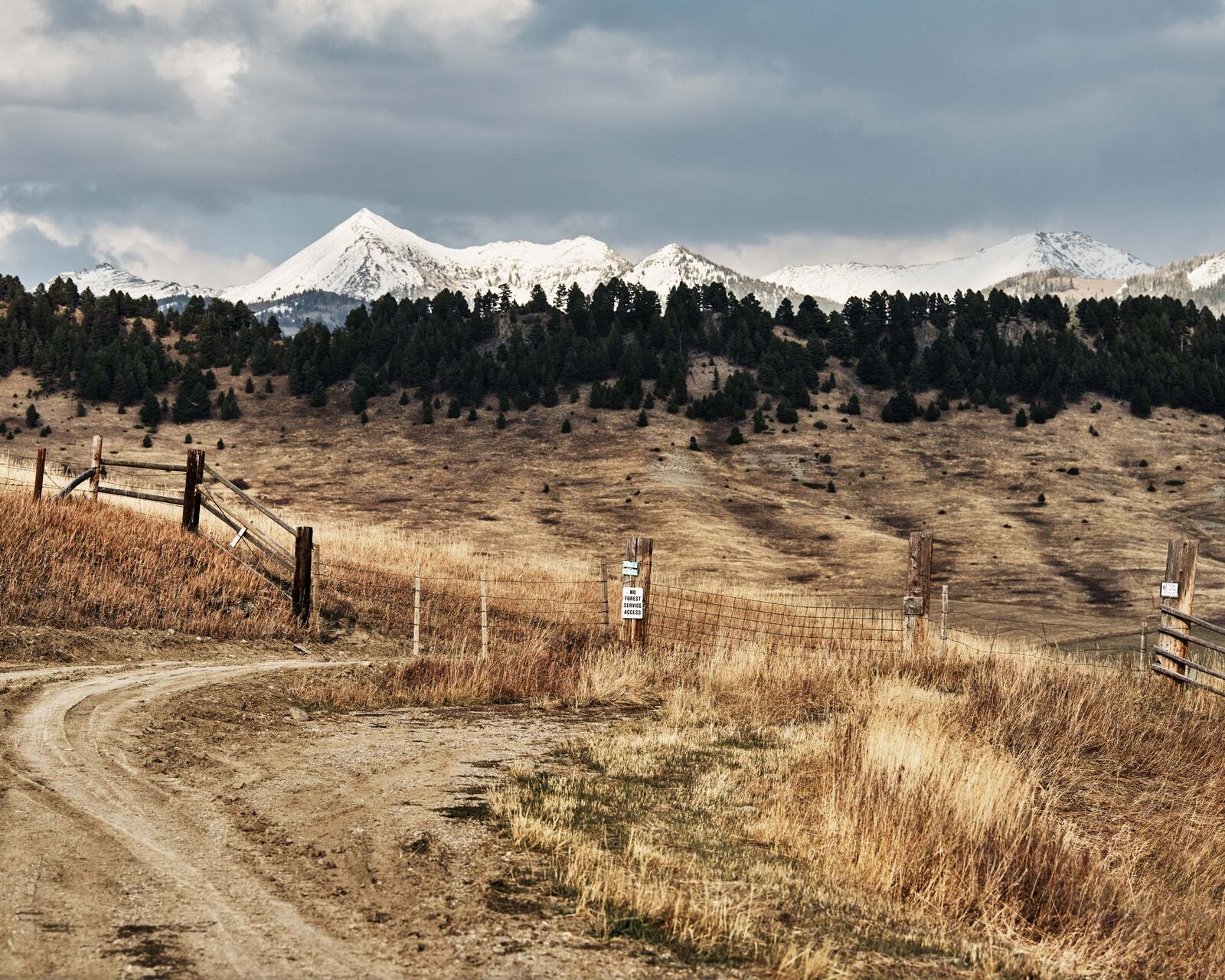
In Park County, Mont., North Fork of Horse Creek Road with a “No Forest Service Access” sign.
Photographer: THOMAS PRIOR FOR BLOOMBERG BUSINESSWEEK
This Land Is No Longer Your Land
The fight
over preserving public land during the Trump era is taking a strange,
angry twist in Montana’s Crazy Mountains. Both sides are armed.
By
Monte Reel
Brad Wilson is following a forest
trail and scanning the dusky spaces between the fir trees for signs of
movement. The black handle of a .44 Magnum juts prominently from his
pack. If he stumbles on a startled bear at close range, the retired
sheriff’s deputy wants to know the gun is within quick reach, in case
something stronger than pepper spray is needed. Wilson isn’t the type
who likes to take chances; he’s the type who plans ahead.
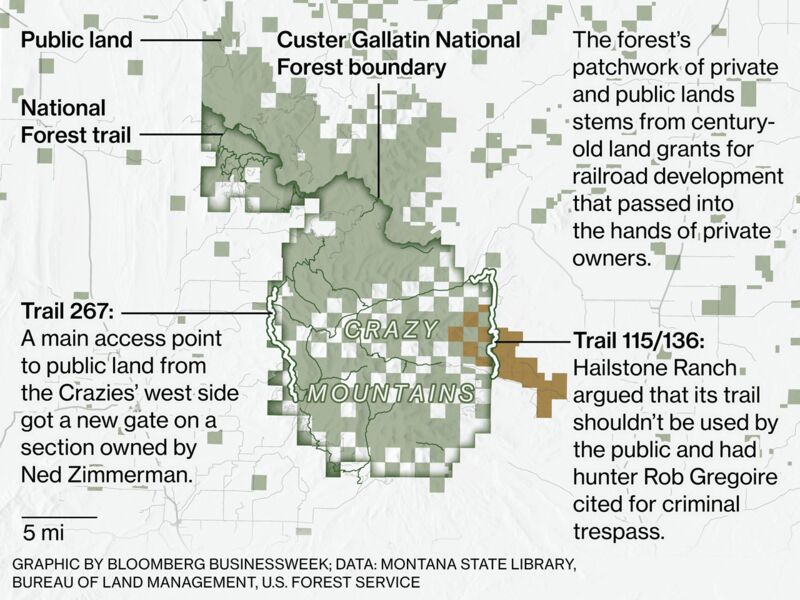
Before setting foot on this path, he unfolded a huge U.S. Forest Service
map and reviewed the route, Trail 267. He put a finger at the
trailhead, which was next to a ranger’s station, then traced its
meandering path into the Crazy Mountains, a chain in south-central
Montana that’s part of the northern Rockies. Like many of the trails and
roads that lead into U.S. Forest Service land, Trail 267 twists in and
out of private properties. These sorts of paths have been used as access
points for decades, but “No Trespassing” signs are popping up on them
with increasing frequency, along with visitors’ logs in which hikers,
hunters, and Forest Service workers are instructed to sign their names,
tacitly acknowledging that the trail is private and that permission for
its use was granted at the private landowners’ discretion.
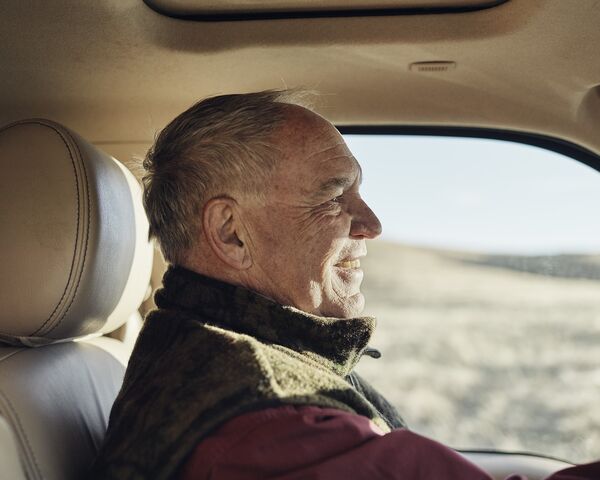
Retired lawman Wilson says ranchers have become more obstacles than neighbors.
Photographer: Thomas Prior for Bloomberg Businessweek
Wilson
hates the signs and the logbooks, interpreting them as underhanded
attempts by a handful of ranchers to dictate who gets to enter federal
property adjacent to their own. Several of the owners operate commercial
hunting businesses or rental cabins; by controlling the points of
ingress to public wilderness, Wilson says, they could effectively turn
tens of thousands of acres of federal land into extensions of their own
ranches. That would allow them to charge thousands of dollars per day
for exclusive access, while turning away anyone—hikers, anglers, bikers,
hunters, locals like Wilson, or even forest rangers—who didn’t strike a
deal.
Wilson, 63, is
out on the trail to show me how the paths weave through private plots
before reaching a destination he loves, and to show me why he loves it:
The pebbled trout streams are crystalline, the elk run rampant, and
painterly snowcaps break the big sky. The ranches along the way are
pretty great, too, the kind of real estate that inspires—and, if
acquired, perhaps even satisfies—the hunger a lot of people feel for
scenic refuge. Many of the landholders are newcomers from out of state,
though some old-timers remain—families that earned their deeds
generations ago, the principal paid by ancestors who shivered through
pitiless winters in tar-paper shacks. Wilson has been hiking and hunting
the Crazies since he was a little kid, but only in the past year or so,
he says, have the private ranchers seemed more like obstacles than
neighbors. “They could shut down pretty much the whole interior of the
Crazy Mountains, as far as I can see,” he says.
He
trudges up a rooty slope and, after a blind bend, sees something
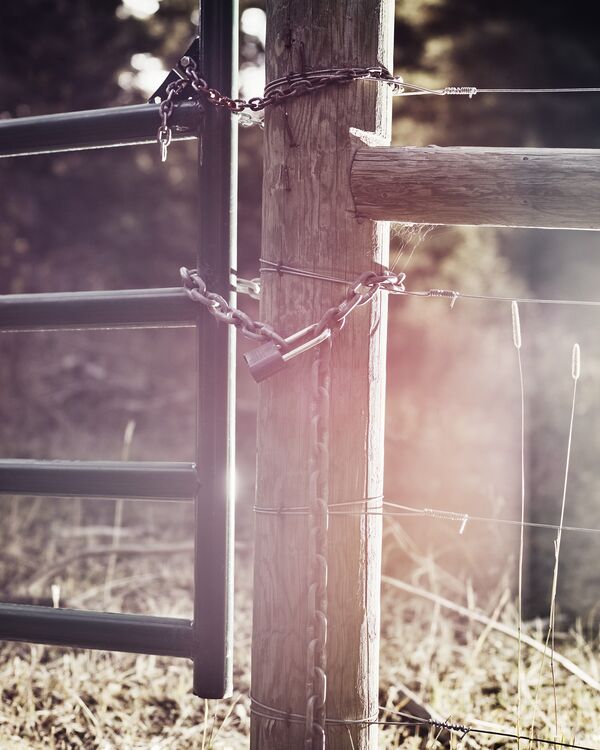
straddling the trail that stops him cold. It’s a padlocked metal gate.
He hiked this trail a couple of weeks before, and the fence wasn’t
there. A sign on it reads, “Private Property: No Forest Service Access,
No Trespassing.” It’s exactly the kind of sign he’d been bad-mouthing a
few minutes earlier, but he wasn’t expecting to see one here. The locked
gate feels like an escalation, a new weapon in an improvised war.
The change in Wilson’s hiking plan is frustrating, but he’s
getting used to the feeling. A year ago he was just a retired county
lawman working as a trustee for the Montana Cowboy Hall of Fame,
and he never would have guessed that, in a battle involving ranchers,
he’d find himself on the side of dirt bikers and trail rats.
A
debate is taking place across the country over preserving land for
recreational public use, but most of the attention is focused on vast
swaths of historically or scientifically significant terrain that
Presidents Barack Obama, Bill Clinton, and to a lesser extent George W.
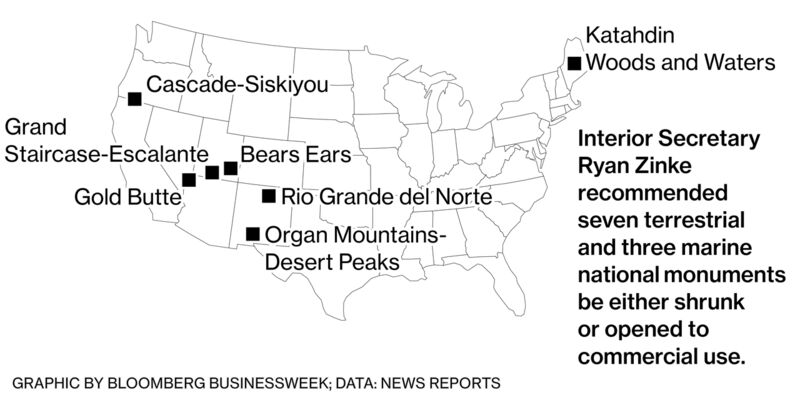
Bush protected under the national monument designation—for example, Bears Ears in Utah and Katahdin Woods and Waters
in Maine. These disputed trails leading into the Crazy Mountains
represent another front in the escalating battle over control of federal
territory, and the fighting here is just as contentious as over the
monuments. Historic settlement patterns in the American West created a
checkerboard pattern of landownership: Public properties are often
broken-up plots, resulting in numerous access disputes. According to a 2013 study
by the Center for Western Priorities, that dynamic has effectively
locked the public out of about 4 million acres of land in Western
states; almost half of that blocked public land, or about 2 million
acres, is in Montana, according to the study. The push to end public
thoroughfare is either an overdue reassertion of private property rights
or an openly cynical land snatch, depending which side of the gate
you’re standing on.
Before Wilson turns around and walks back to
the trailhead, he vows that he’ll be better prepared next time.
Alongside the .44 he’ll pack a pair of super-heavy-duty bolt cutters,
and he swears he’ll tear that gate down.
Late
last October, in the dying days of the Obama era, a U.S. district judge
issued a verdict that seemed to set a precedent for paths like this
one. The Texas-based owners of a Montana property called Wonder Ranch,
about 100 miles southeast of the Crazy Mountains, had sued the Forest Service
after the government filed a statement of interest claiming an
easement—a legal agreement to use a portion of someone’s land for a
specific purpose—on a trail that ran across the ranch’s property before
reaching the Lee Metcalf Wilderness. The Forest Service said the trail
had been routinely used as an access route to the forest by the
government and the public for decades, and therefore it should be
considered public because of historical use. The owners’ suit argued
that the government had no right to an easement. The Department of
Justice countersued, producing evidence dating back more than a century
showing that the public and the government consistently used the trail
for packhorses and hike-ins. The Forest Service won the case.
Had
the landowners been able to show that the trail had been used for at
least five consecutive years only by those who’d received their
permission, their claims of private control might have held. That helps
explain why Alex Sienkiewicz, the forest ranger overseeing the district
that includes the Crazy Mountains, every year sends an email to his
staff reminding them never to ask landowners’ permission to use trails
that the government already considers public. “By asking permission,” he
wrote in last year’s reminder, “one undermines the public access rights
and plays into their lawyers’ trap of establishing a history of
permissive access.” That didn’t mean anyone could veer off the trail and
slip onto the private property—that’s trespassing, no question about
it—it just meant the trail itself should be considered a public
throughway.
Every
trail leading to public land is different, and not all necessarily have
a history of public use, but Sienkiewicz was echoing the government’s
generally established position regarding such access points, the one
argued by Justice Department attorneys in the Wonder Ranch LLC case.
Obama himself outlined his administration’s overarching philosophy when
he visited southern Montana during his first term to try his hand at fly-fishing.
“He said he felt really strongly that a key to getting kids to become
adults that care about their natural surroundings is making sure they
can get out to them in the first place,” says Dan Vermillion, a local
fly-fishing outfitter and the chair of Montana’s Fish and Wildlife Commission,
who waded into the Gallatin River with Obama. “Public access is one of
those great equalizers that says whether you’re rich, poor, or
otherwise, you still have access to public lands, and you can go out and
enjoy them.”
A disputed road leading to public land, blocked by the landowning Galt family, who sell self-guided hunts on their ranch.
Photographer: Thomas Prior for Bloomberg Businessweek
For a while, it seemed that attitude might be one of the rare Obama positions that President Donald Trump could live with. In a pre-election interview, Trump told the magazine Field & Stream
he didn’t like the idea of transferring the land to the states,
suggesting such transfers could erode public oversight of them: “I want
to keep the lands great, and you don’t know what the state is going to
do,” he said. “I mean, are they going to sell if they get into a little
bit of trouble? And I don’t think it’s something that should be sold. We
have to be great stewards of this land. This is magnificent land.”
Public
land advocates smelled a contradiction, since the new president was
positioning himself elsewhere as a champion of private property rights.
And regardless of what he said, Trump’s campaign had tapped into a very
deep well of antigovernment sentiment, the sort that Nevada rancher Cliven Bundy
appealed to when he occupied public territories and led armed standoffs
against federal agents in 2014 and again in 2016. The co-chair of a
state group called Veterans for Trump pleaded guilty to helping organize the ad hoc rebel militia, and Roger Stone, a longtime Trump adviser, has been one of Bundy’s most vocal supporters.
Immediately after the election, whether or not the results had anything
to do with their actions, the Crazy Mountains landowners launched a
collective blitz to take control of the trails leading to Forest Service
property.
Rob Gregoire, an engineer from Bozeman,
Mont., says he had little idea what awaited him when he marched up the
Crazy Mountains on Nov. 23, 2016. He’d been granted a state tag allowing
him to hunt bull elk on the eastern slopes, and before he set out for
Forest Service land, he’d called Sienkiewicz, the district ranger, to
double-check that the public trail marked on his map was indeed public.
The ranger had explained agency policy to him, which indicated that the
trail was public, but told Gregoire to use his own judgment if a
landowner objected.
Gregoire decided to go for it. When the trail
veered through a private plot called the Hailstone Ranch, he spotted a
No Trespassing sign that read, “The Forest Service Has No Easement
Here.” He ignored it, consulting his GPS to make sure he never strayed
from the path onto the private ranch land. The landowner somehow
detected that he was using the trail (“I think he had an alarm or
something,” Gregoire later speculated) and called a sheriff’s deputy,
who was waiting for Gregoire to return at the end of the day. The deputy
charged him with criminal trespassing.
Shortly after that, the
owners of nine ranches neighboring the Hailstone went after Sienkiewicz.
Back on July 20, a volunteer at Public Land/Water Access Association Inc.,
a Montana nonprofit that supports open public access to federal lands
and waterways, had gotten hold of, then posted on its Facebook page,
Sienkiewicz’s most recent annual email reminder to his staff advising
them never to sign visitor logs for trail access or ask permission. The
property owners apparently assumed that Sienkiewicz had posted the item
himself—proof that he was behaving as a political activist, not a public
servant. The ranch owners sent a letter to U.S. Senator Steve Daines, a
Republican representing Montana, saying in part, “As a direct result of
this inflammatory Facebook post, we have many questions about the FS
position regarding access across our private property.” Several of the
ranchers who signed the letter have also been listed as contributors to Daines’s political campaigns in the past five years.
In
May, Daines echoed the landowners’ complaints—and forwarded a screen
shot of the Facebook post—in a letter to Thomas Tidwell, then the chief
of the Forest Service, and to Agriculture Secretary Sonny Perdue, whose
agency oversees the Forest Service. Less than two weeks later,
Representative Pete Sessions (R-Texas) got involved, firing off a
similar complaint to Perdue and Interior Secretary Ryan Zinke, who has a
long history in Montana. An avid hunter and fisherman, he was born in
Bozeman, about 40 miles from the Crazies. He was also a Montana
congressman, filling the seat Daines had occupied before he moved to the
Senate. (At least one of the ranchers donated to Zinke’s campaign.)
A road leading toward the Crazy Mountains.
Photographer: Thomas Prior for Bloomberg Businessweek
In his letter,
Sessions described the Forest Service’s approach to public access as
part of “the war on private property owners conducted by the Obama
administration.” The Wonder Ranch owners hadn’t been among the nine who
signed the initial letter, but they were the link that got Sessions
involved. One of the co-owners, a Texan named Chris Hudson, lives in
Sessions’ district, and Sessions proposed that Hudson and Perdue meet.
Sessions also recommended that the Forest Service issue a nationwide
directive to prevent rangers or individual districts from declaring
paths and roads public based on historic use.
It’s not known if
Perdue or Zinke took direct action after receiving the complaints
(Perdue’s, Zinke’s, and Sessions’ offices didn’t return calls for this
story, nor did Hudson’s attorney). But the week after Sessions’ letter
was sent, Sienkiewicz was removed from his job as district ranger,
pending an internal review, and moved to a desk job evaluating gold
mining proposals in another part of Montana. The public controversy
surrounding his suspension stretched on for more than four months and
brought significant local criticism to the Forest Service. “Alex was
just following the Forest Service manual,” says Bernard Lea, who spent
36 years in the Forest Service in Montana before retiring and becoming a
leader of the Public Land/Water Access Association. The day before
Sienkiewicz was told of his transfer, Gregoire agreed to settle his
trespassing charge and pay a $500 fine. The county attorney overseeing
the case happened to be the husband of one of the landowners who’d
signed the letter to Perdue and Daines complaining about Sienkiewicz.
“With him on board,” Gregoire says, “I didn’t think I could win.”
Defenders
of Sienkiewicz and Gregoire—a group that included land access
advocates, proprietors of recreation businesses, wildlife groups, and
individuals—cast the developments as evidence of an under-the-table
assault on public lands that the Trump administration appeared to
endorse, if not initiate. This spring, Trump requested that Zinke’s Department of the Interior review national monuments, designated or enlarged since 1996,
and possibly downsize them, a step he said could rectify what he
considered a “massive federal land grab.” Several politicians from Utah,
such as Orrin Hatch, Rob Bishop, and Jason Chaffetz, had led the
downsizing push, and for years they’d been advocating turning such lands
over to the states—the strategy Trump had earlier declared would result
in a selloff to the highest bidder. The department eventually suggested
downsizing six of the 27 monuments under review, but the ultimate fate
of those lands and waters remains in limbo; the matter will go to
Congress, and the conservationists have said they will fight the new
boundaries in court.
PERC’s Anderson says ranch owners serve nature better than government can.
Photographer: Thomas Prior for Bloomberg Businessweek
“I absolutely hate the movie A River Runs Through It,” says Terry Anderson,
senior fellow and the former president and executive director of the
Bozeman-based Property and Environment Research Center, commonly known
as PERC.
“It destroyed fly-fishing in Montana.” He’s referring to the wave of
tourists in fresh-off-the-rack waders inspired by Brad Pitt in the film,
who’s guided through life in leaf-filtered light by fraternal love and
river sport. Anderson grew up in Montana, and he remembers when the
Bozeman airport terminal was smaller than a coffee shop, and you could
spend all day on a hike without seeing another soul. The unofficial
state motto is “The Last Best Place,” and the feeling that untrammeled
natural landscapes are becoming scarce has engendered a strain of
possessiveness. At a gas station near the Crazy Mountains, you’ll find
T-shirts that say “Montana Sucks—Now Go Home and Tell All Your Friends”
and bumper stickers that read “Montana Is Full—I Hear North Dakota Is
Nice.”
Anderson has carved out a field for himself in something
called free-market environmentalism. Along with his job at PERC, he’s a
professor emeritus at Montana State University and a senior fellow at
Stanford’s Hoover Institution, a libertarian-leaning think tank. In
op-eds published across the country, he’s an evangelist for limited
government and private property rights. He views many environmentalists
with undisguised contempt, and they generally return the favor.
Like many nonprofits, PERC doesn’t disclose its funding sources, but Greenpeace International has posted records showing that they’ve included Exxon Mobil Corp. and the industrialists Charles and David Koch.
Anderson probably wouldn’t worry too much about how that looks: He
believes the private sector, in most cases, is a better steward of
nature than the government.
He argues that public land access obeys a dynamic prevalent in
vehicular traffic planning. When highway departments construct
additional lanes to a highway to ease congestion, he says, it generally
has the opposite effect, merely allowing more drivers to clog the road.
In a similar way, encouraging the use of multiple pathways into public
lands degrades the environment. Better, he maintains, would be to let
private stakeholders control access and charge fees instead of burdening
taxpayers with the job; fewer people would trample the trails, and
those trails would be better kept.
At the right place and the
right time, the notion that the Crazies are being overrun by hordes of
weekenders desperate for recreation is easy to conjure. It’s best done
on a sun-shot Saturday morning in summer, close to Half Moon Campground,
which is near the lone uncontested public entry point on the east side
of the Crazies. Here, campers and hikers gather before dispersing into
the relative solitude of the vast mountain wilderness. On one such
morning in August, no fewer than 33 vehicles overfilled a parking area
near the trailhead. “It’s like a Walmart parking lot,” grumbled Dario
Quilici, a 35-year-old who was hiking in with Gino Mussolini, his German
wirehaired pointer, for some camping and fishing.
Quilici’s plan
was seat-of-the-pants. He thought he might spend three or four days
hiking to an exit point on the far side of the mountains, but he didn’t
realize that the most direct trail was blocked by the gate Wilson had
confronted. Other possible paths were also contested. When I told him
this, he redirected his criticism away from the parking lot and toward
the landowners. “I bet they have some lobbying power,” he said. “They
just want to keep everything like it’s their own private reserve.”
The town of Wilsall, at the foot of the Crazies.
Photographer: Thomas Prior for Bloomberg Businessweek
Herein
lies the big challenge for the landowners and their defenders: Survey
after survey has shown that the public hates the idea that someone can
lock taxpayers out of public land, and that they’re suspicious of
transferring control of such tracts to private enterprise. Nevertheless,
Anderson and PERC deny that their position is out of step with public
opinion, even casting it as pro-access. Their rationale is oblique: If
the Forest Service insists the public has a right to use the trails,
they say, private landowners will naturally rebel; numerous court
battles will ensue, tying up the trails in years of litigation and
costing the government millions of dollars. And as the cases proceed,
the landowners will take steps to secure their property rights, blocking
traffic on the trails until the mess is sorted out.
“In the
places where now there are signs,” Anderson predicts, “you’ll see a
locked gate.” His comment is an informed one. He counts several of the
landowners involved in the Crazy Mountains disputes as friends,
including the owners of the Rein Anchor Outfitting and Ranch,
who operate a hunting lodge and signed the letter against Sienkiewicz.
PERC’s affiliation with politically connected outfitters that stand to
profit if trails are closed bolsters the sense, to Wilson and others
confronting locked gates, that a void in coherent policy about public
land management is being filled by cronyism that rewards wealth and
connections above all else. Another co-owner of the Wonder Ranch,
Frank-Paul King, a friend and former student of Anderson’s, served on
PERC’s board. Hudson, the man who got Representative Sessions involved,
is King’s brother-in-law, and he’s also a board member and the former
president of the Dallas Safari Club, a group that made national headlines in 2014 when it auctioned off a trip to Africa to hunt an endangered rhinoceros. (The winning bidder,
who paid $350,000, traveled to Namibia and shot a black rhino bull, an
animal the club said had threatened the rest of the herd.) The Dallas
Safari Club has granted PERC funding for, among other things, a study on “private conservation in the public interest.”
In
2016 the Dallas Safari Club hosted a fundraiser featuring the big-game
hunting enthusiast Donald Trump Jr. that netted $60,000 in campaign
donations to the Republican National Committee. “The candidate’s family
connection to hunting and its legacy gives DSC a huge opportunity to
have the right people in place as advocates for our mission,” the club’s
newsletter stated. After Trump was elected, Hudson was listed as an
organizer for a post-inaugural fundraiser called “Opening Day 45,” which
featured Eric and Donald Trump Jr. as co-chairs. It was canceled after
TMZ published an early draft of the invitation
last December, promising personal access to President Trump, along with
a multiday hunting excursion with his sons, to anyone who donated more
than $500,000, sparking criticism that the sons planned to peddle access
to their father.
This circle of big-game hunters is relatively
small, which means links among them are numerous enough to allow critics
of the Trump administration to claim political malfeasance, and they’re
tangential enough that defenders can argue that they’re coincidental
and easily misconstrued. One person who has hunted with Trump Jr. is
Senator Daines, of the anti-Sienkiewicz letters. The two men met last
fall in a camp in Montana during an elk hunt. Daines later called on
Trump Jr. to return to the state to campaign on behalf of Greg
Gianforte, who was running for the congressional seat Zinke gave up to
lead the Interior Department. This spring, Trump Jr. explained that he
had grown to trust Daines unequivocally; when the senator told the
president’s son that Gianforte was “an awesome guy,” he decided to get
involved. “That vouching was enough for me,” Trump Jr. said at a rally
in April.
On a Thursday evening in August, a couple
dozen people gathered in an old schoolhouse in Livingston, Mont., to
grill Mary Erickson, the Forest Service’s supervisor of the Custer Gallatin National Forest,
about Sienkiewicz’s reassignment. Most of the people in the crowd
viewed the case with skepticism or outrage, and Erickson appeared to be
choosing her words carefully to avoid pushing anyone toward the angrier
end of the scale.
The trail access issue was extremely sensitive
inside the Forest Service, she explained, and potentially costly, too.
The Trump administration was proposing
a 73 percent cut in the Forest Service’s capital improvement and
maintenance budget and an 84 percent reduction, from $77 million to $12
million, in its trail program budget. The Wonder Ranch case, she
observed, had cost the government “in the millions of dollars,” and it
wasn’t over yet—the landowners were appealing the decision, and it now
sat with an appellate judge. “I’m not saying we’re never going to go to
court, but the Forest Service is going to be careful about when we go to
court and make sure we’re going to court on cases we can win,” she
said.
A padlock on a gate blocking access to the Porcupine Lowline Trail.
Photographer: Thomas Prior for Bloomberg Businessweek
Erickson
downplayed suggestions that any of the politicians involved in the
Sienkiewicz case had been directly responsible for his removal, and she
suggested that Sienkiewicz should have been more diplomatic when he
dealt with the local landowners, to avoid the appearance of “pulling to
this side or that side” regarding any questions of public access.
That
notion didn’t sit well with some in the audience, particularly those
who believed that if the unfolding drama showed bias toward an interest
group, it was toward the private landowners. Nick Gevock, the
conservation director of the Montana Wildlife Federation, told Erickson that Sienkiewicz was a public servant and he’d simply taken the side of the general public.
The agency in mid-October announced it was giving Sienkiewicz his job back. But Gevock’s frustrations spoke to an unresolved question underlying all of the disputes: Who, exactly, is the Forest Service supposed to serve? On the agency’s website, former Director Thomas Tidwell wrote that its guiding principles were clearly established by Gifford Pinchot,
the service’s founding chief, during the Gilded Age—“a time when the
nation’s resources were being exploited for the benefit of the wealthy
few,” Tidwell stated. “The national forests were based on a notion that
was just the opposite—that these lands belong to everyone.”
The
public access advocates say they’re not sure they trust the spirit of
Pinchot’s original message has survived intact. The mixed signals coming
from the Trump administration mean everything rests on how those
sometimes conflicting messages are interpreted. Zinke has repeatedly
insisted, without offering specifics, that he is pro-access, and on his
first day in office he pledged
to fight against the “dramatic decreases in access to public lands
across the board” that he said were plaguing America. “It worries me to
think about hunting and fishing becoming activities for the landowning
elite,” he said.
But this past July, while public land advocates
were protesting the Interior Department’s pending move to downsize the
national monuments and hikers were cursing the new No Trespassing signs
in the Crazies, Zinke traveled to Denver to speak at the annual
conference of the American Legislative Exchange Council,
or ALEC. The group, a conservative lobbying coalition that helps
lawmakers draft legislative proposals, has energetically pushed for the
potential transfer of federal lands to the states.
Whether Zinke’s speech clarified the government’s general, overarching
philosophy on public-vs.-private control of lands that are currently
federal, only members of the lobbying group can say for sure. Unlike
several other speeches delivered at the conference, Zinke’s wasn’t
transcribed or published, and it was closed to the general public.
(A
previous version of this story ascribed a grant from the Dallas Safari
Club to PERC that was for The Conservation Fund. The text has been
corrected in the 28th paragraph to reflect the accurate study.)
A recent story indicated that the federal government spent over $2.7 billion (yes- that’s billion, folks with a “b”) to fight wildfires during the 2017 fiscal year, which ended September 1. Montana has spent in excess of $400 million to cope with this year’s disastrous fire season.
The final tally for both the federal government, Montana and other western states is still to come in, and fires continue to burn as we enter fall. This raises the question for those who have so stridently advocated that states assume federal public lands’ “management.” If our legislature and governor are struggling to pay our state fire costs for this year, and balance the budget, where would we be if we also were responsible for the care and protection of the many federal lands that also went up in flames this summer?
The issue is yet another in an already long, long list of legal, scientific and philosophical questions that serves to underscore the short-sighted and ill-conceived nature of efforts by those who strive to transfer federal lands to state ownership.