Really nice story about Carol & John Gibson! John serves as Mentor to MSA. Carol was highly respected by all who knew her!
J
Trip to Alaska honors memory of Carol Gibson
Carol Gibson seemed to have the magic touch when it came to catching
salmon when she lived in Alaska. Here she poses with a 51-pounder she
landed.
Courtesy of John Gibson
They met in California, fell in love and married.
Soon, John and Carol Gibson began looking for somewhere new to continue their lives together.
“Let's go to Alaska,” they said.
But where?
“We actually put up a big ... map of Alaska and threw darts at it,” John said. “And the darts hit close to Ketchikan.”
The Gibsons wrote letters to potential employers in Ketchikan and were
hired — she as an elementary school teacher and he as a log scaler with
the U.S. Forest Service.
Jobs secured, the Gibsons moved north. The year was 1957.
Although they would end up staying a short time before relocating to
Montana, Ketchikan became a special place for the Gibsons — not least
because they did a lot of fishing. And as good a fisherman as John
continues to be, Carol was better at catching big king salmon.
John is now 86. His voice remains deep and full, although it broke when
he spoke of Carol, who died this past December in their hometown of
Billings.
In June, he returned to Ketchikan with their daughter, Teal, to spread some of Carol’s ashes in a place she’d loved.
“I am here to honor her — she was the light of my life for 61 years,”
John said before reciting a song verse he’d written for his late wife.
“I'll spread her ashes in the mountains; I'll spread her ashes by the
sea; in special places where we lived and loved each other; during 60
years she shared her life with me.”
Early years
John grew
up in northern California near the Klamath River, which he described as
having been an excellent salmon and steelhead river back then.
When he got out of the Army he went to work scaling logs at Happy Camp,
California. That’s where he met Carol, who was working in an office
compiling timber scale data during her summers off from college. They
hit it off.
At that time, John also worked fighting forest fires.
“I remember, she left for college and I was on a forest fire and I saw
her car go down the highway and I was way up on the hill, fighting the
fire,” John said. “But (the relationship) lasted, I don’t know why she
picked me when she had all of those other college men to consider, but
she did.”
Carol was 23 when they married. She was intelligent, pretty, musically talented and a hard worker.
John recalls that she stood out in Ketchikan.
“I'll tell you when the halibut fleet was in town and you went downtown
with her, it was an adventure because she got hit on a lot — and some
of them were pretty serious,” he said.
Fishing
John
himself continued to fall further in love with his bride. The
compatbility was enhanced by a fact that was becoming crystal clear in
Ketchikan
“She could fish,” John said. “Don’t sell that short.”
Although they didn’t have much money when they arrived in Ketchikan,
they soon purchased a boat and started chasing salmon. He remembers a
learning curve.
“Learned some lessons — lost some big fish
because we thought we ought to use just 15-pound test (line) and be
sportsmen,” John said. “And about the first time I lost a big salmon
because he broke me off, I went to 30-pound test.”
He said he
always ensured that Carol had top-quality fishing gear: “All I did for
her was to make sure that her equipment was good.”
Salmon
Carol made good use of the gear. In 1958, for example, she had remarkable success fishing for king salmon.
Two stories stand out. One involves a fish she caught solo near Carroll Point.
Well, mostly solo. She’d gone fishing with the couple’s 5-month-old, 50-pound Labrador retriever pup.
She’d decided to go fishing in the couple’s 14-foot skiff with just the
dog because John was fighting a forest fire on the Kenai Peninsula, she
couldn’t find anyone else to go with, and it was Derby Days in
Ketchikan.
“I wouldn’t consider not fishing at all, so I decided
to go alone,” Carol wrote about her adventure in a story that appeared
in "The Alaska Sportsman" magazine in 1960.
At around noon that day — and with a downpour on the horizon — a king salmon struck the bait.
“I forgot about the rain gear as I grabbed the rod from the rod holder
and gave a jerk, setting the hook,” Carol wrote. “The salmon, furious,
peeled line from the reel in a long run of a hundred to a hundred and
fifty yards.”
Over the next several minutes, the king salmon
would twist, turn, jump, pass under the boat, and run again. Carol
worked it back to the boat, but had to untangle the excited pup from the
net before taking a couple of tries to haul the king salmon aboard.
“I made a cautious pass for him with the net but he ducked under and I
thought for sure he would catch the hooks in the net’s webbing but I was
lucky,” she wrote. “The next try I got him. I dropped the pole, grabbed
the net with both hands and heaved him into the skiff. At that point my
rubbery legs gave out and I simply sat down — limp.”
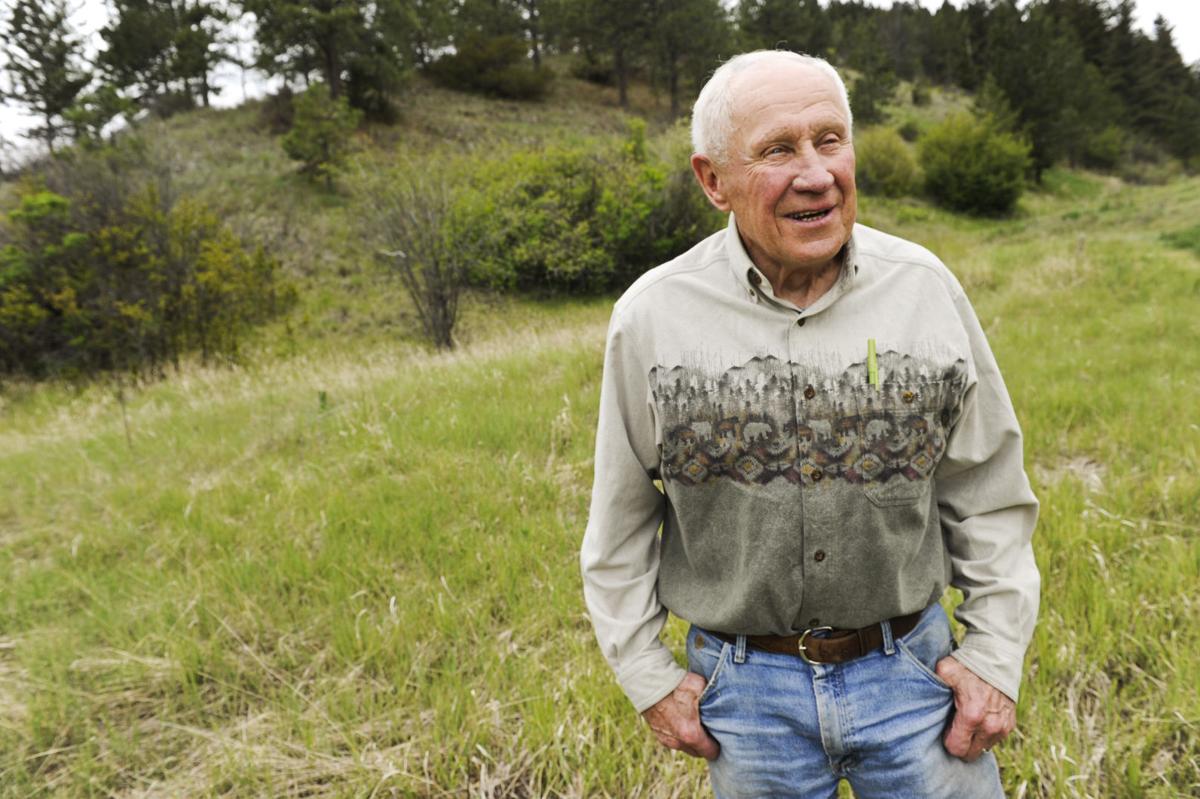
John Gibson has long been a force behind the Public Land/Water Access Association in Montana.
But she didn’t run the fish in to the weigh-in station right away. Not
quite realizing what she had, she went to Joe Lewis’ marina (now
Hole-in-the-Wall) to meet a friend who wanted a boat ride. While Carol
had coffee with her friend, she told Lewis that she’d caught a big fish.
Lewis went out to weigh the salmon.
“A minute later he popped back in,” Carol wrote.
“Get this fish to the weigh-in station before he dries out and loses any more weight,” Lewis told her.
Carol, her friend and her friend’s two children hopped in the skiff and
off they went. As they neared the ramp by the weigh-in station, the
motor cut out and they had to paddled the rest of the way in.
“I’m sure they thought we were just two silly women who had only a ‘woman-size’ fish to enter,” she wrote.
The king weighed in at 43 pounds, 10 ounces — worth fourth place in the
Derby Days and earning a prize of a Winchester Model .77 semiautomatic
rifle. Carol managed to get in touch with her husband.
“She called me up and said, ‘Honey, I caught a big fish today,’” John recalled.
Salmon 2
The other story involves a fishing trip with Ernie Eggers, who’d won
the seasonal king salmon derby in 1955 with a 65.2-pound king salmon.
Eggers was retired, and loved to fish and wager on the day’s catch.
“He had won the derby, so he saw himself as a great fisherman,” John
said. “So he would say, ‘Alright, here’s the way it is today. We’re
going to have a dollar for the first (fish), a dollar for the biggest
and a dollar for the most.’”
They usually beat him, and they ended up listening to Eggers talk about his derby-winning fish many times.
Eggers would describe how his big king salmon, instead of running on
the surface, went down like a halibut and stayed on the bottom.
That’s what happened for Carol on one particular day.
She, John and Eggers had gone out fishing at the mouth of Carroll Inlet. Also along was a little girl Carol was babysitting.
“I can remember that she was telling stories to this little girl, ...
(and) every time we went past that rock she caught a salmon,” John said.
“And I heard a guy say — sound carries over the water you know — the
guy says ‘For Christ’s sake, I can’t catch a big herring, and every time
that woman goes past that rock she hooks a salmon.’”
Big hit
One of those salmon hit hard, and the reel spun as the fish went deep. Then it stayed deep.
“He was one of the those that sulked on the bottom, and (Eggers) just
said, ‘Well you just hold on to him and he'll come up sooner or later.
... Just keep the pressure on him.’”
It took Carol about two hours to bring the salmon to the boat.
“It was really tough,” John said. “She was very tired when she was through.”
That fish weighed in at just under 51 pounds.
When asked whether he or Carol was the better angler, John responded quickly.
“Well, at catching big salmon, she was,” he said.
Green water
John and Carol Gibson moved to Montana after their first child arrived.
He earned a degree in forestry from the University of Montana, and
returned to Ketchikan for a couple of summers to continue working with
the Forest Service.
He still recalls traveling aboard the agency’s ranger boats, specifically the Ranger 7.
“I tell you I still have nightmares of some of the storms we went
through on those boats,” he said. “I've been on those when we were
trying to come down Clarence Strait and the wind was coming one way and
the current was going the other way, and when they said green water over
the cabin, they meant it.
“Those big waves, we’d dive into one
and you couldn’t see anything but green water for 30 seconds and then
you'd come up, and I still have nightmares over that,” he said. “That's
scarier than anything just about, that I’ve ever done.”
Montana
The Gibsons would settle in Montana.
Carol continued to work as a teacher in various communities, and later
served in the Montana Legislature. She also helped John in his service
as president of the Public Land/Water Access Association.
They
visited Ketchikan on a cruise about 10 years ago, taking a cab to
Hole-in-the-Wall to see where they used to keep their boat.
“That was the last time that she saw Alaska,” John said.
John continues to fish. When he talked with the Daily News he still had
a sunburn from fishing on a pontoon boat in Montana’s Mission Lake. His
daughter, Teal, said he could go on any body of water and catch fish
when no one else can.
John smiled at that, and said, “Well, it’s
not quite that way, but I’m a dyed-in-the-wool fisherman. I'm still
fishing at 86, so that tells you something.”
While his eyes would
brighten when he talked of fishing, it was nothing compared to the
range of emotion that surfaced when he spoke of Carol.
“She was everything,” John said.