|

|
Please go viral!!! Let your Senator know your opposition!!!
The Montana Sportsmen Alliance would like to go on record as opposing the appointment of Pat Tabor to the F&G Commission. Mr. Tabor is well known to us. He is an ultra rich corp exec that came to Montana and bought out a number of outfitters. He is a Moga past president. Mr. Tabor also served on the Board of Outfitters (Boo) for a term.
Mr. Tabor has taught us not to trust him. His main charge as a member of Boo was to assure protection of the health, safety, and welfare of the public. He was supposed to serve all the public of Montana in Boo but was instead, intent on reducing outfitters responsibilities to the public and to managing agencies. He failed to represent anyone but Moga. He was strictly interested in reducing transparency and hiding information from the public. He even openly chastised other outfitters on the board for not voting as a block and his comments were recorded in the minutes.
Mr. Tabor is one of reasons the Boo is a big sad joke. Outfitters and guides must come before the board when they have been cited for committed infractions. Mr. Tabor led the charge on the Boo to let outfitters and guides get off with a slap of the hand for infractions brought in front of the board. Outfitters dominate every vote of Boo. We have never seen any balance of representation from Mr. Tabor.
In his new capacity as F&G Commission Chair he just engineered a freebie hunt for his buddies in Moga. Sportsmen have fought for transparency and getting rid of the “good old boys” type of operations. Mr. Tabor is a danger to transparent, honest game management in Montana. We respectfully ask for Mr. Tabor to be rejected for F&G Commissioner.
Montana Sportsmen Alliance
Leadership Team
John Borgreen Great Falls
Steve Schindler Glasgow
Don Thomas Lewistown
Sam Milodragovich Butte
Ray Gross Dillon
Jeff Herbert Helena
Joe Perry Conrad
Dale Tribby Miles City
JW Westman Park City
Robert Wood Hamilton
Doug Krings Lewistown

For the hook and bullet community in Western Montana, the Flathead Reservation is a source of incredible opportunity. From backpacking and skiing in the Mission Range to pursuing waterfowl, pheasants and a wide array of fish species on the valley floor, outdoorsmen and women in our part of the state are privileged to have access to reservation lands, their abundant wildlife habitat and the adventures they provide. Nobody who has hunted birds or jigged for perch with the Mission Mountains in the background forgets that experience.
We owe that privilege to the hospitality of the Confederated Salish and Kootenai Tribes, who manage and own the lands, fish and wildlife that make the Flathead Reservation the peerless place that it is. For nearly thirty years, the CSKT has allowed non-tribal members to hunt and fish on the reservation through the Montana-CSKT Fishing and Bird Hunting Agreement, and the state has recognized their sovereignty and authority to manage their lands and the fish and wildlife within. That long standing relationship is now under attack in the Legislature, and hunters and anglers will suffer if a few landowners have their way.
House Bill 241, introduced by Rep. Joe Read of Ronan, would give non-tribal members who own inholdings on Montana reservations the ability to hunt big game on their property, thereby bypassing the decades of collaborative management and mutual respect between the State of Montana and the CSKT. Should this bill pass, it will inevitably provoke the end of the Montana CSKT Fishing and Bird Hunting Agreement as well as litigation by the CSKT, who will, justifiably, fight for their right to manage wildlife within the boundaries of the reservation.
This bill, brought forward for the benefit of a few non-tribal landowners on the reservation, threatens the opportunities of the hunters and anglers who hunt birds and fish on CSKT lands each year. Our organizations oppose this bill, and we ask the Legislature to affirm the management authority of the CSKT and the proven success of the Agreement by rejecting HB 241.
It’s worth noting that this bill would affect all reservations in the state of Montana, from the Flathead Reservation to the Crow, Blackfeet and Fort Peck reservations. We would likely see lawsuits resulting from this assault on tribal sovereignty from those tribes as well, with corresponding closures for recreation. Those bringing this bill forward are apparently ignorant of the extent to which this would profoundly injure the relationships between the outdoor community and those tribes as well as the loss of access and opportunity that would result for hunters and anglers across Montana.
Montanans are not wanting for hunting and angling opportunity in our state—we are lucky to live in one of the most opportunity-rich places in North America. Hunters who live on the Flathead Reservation do not have to travel far in any direction to find elk and deer populations on Forest Service, Bureau of Land Management, State of Montana and private lands outside of the reservation. Those landowners who are attempting to legislate against the sovereignty of the CSKT should remember that they, and we, are lucky to be able to live and recreate in one of the most beautiful places in Montana. Let’s not push it.
Please join Hellgate Hunters & Anglers, the Montana Wildlife Federation, Pheasants Forever and the Montana Chapter of Backcountry Hunters & Anglers in opposing this legislation. If you hunt birds or fish on the Flathead Reservation, now is the time to speak up or risk having your opportunities threatened. Contact your legislators on the House Fish, Wildlife and Parks Committee before the bill’s hearing on Tuesday, February 9, and let them know that you oppose this misguided legislation.
Walker Conyngham is the president of Hellgate Hunters & Anglers. Tom Puchlerz is the president of the Montana Wildlife Federation board. John Sullivan is the board chair of the Montana Chapter of Backcountry Hunters & Anglers. Chad Harvey is the regional representative for Pheasants Forever.
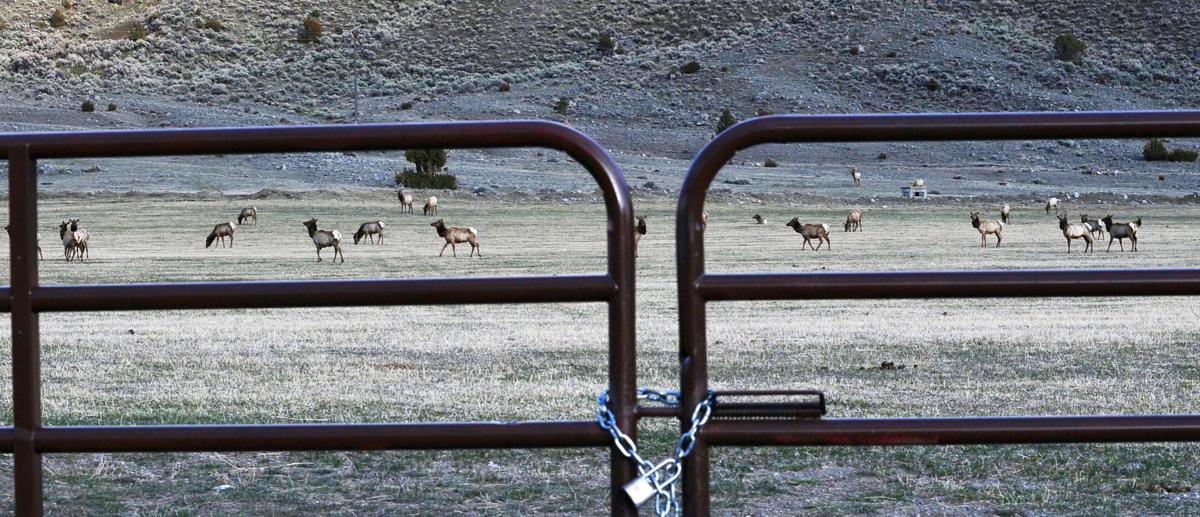
Guaranteeing outfitters a portion of nonresident big game licenses could lead to more leasing of private land, hunters said during testimony on Senate Bill 143 on Tuesday in Helena.
Hunting outfitters turned out in force at the Capitol on Tuesday to support a bill that would guarantee them a percentage of nonresident deer and elk licenses for their clients.
“This bill optimizes the economic return to Montana by making available a portion of the existing nonresident licenses to the hunter who chooses to hunt with an outfitter,” said Chuck Rein, a Big Timber rancher, outfitter and president of the Montana Outfitters and Guides Association, during a hearing before the Senate Fish and Game Commission.
Critics see the bill as a privatization of public wildlife, a subsidy for one group of small business owners, and also reducing the opportunities for do-it-yourself nonresident hunters to draw a tag.
“This bill will put us back on the path to privatizing and monetizing our publicly owned wildlife resources," said John Sullivan, president of the Montana Chapter of Backcountry Hunters and Anglers. "The citizens of Montana rejected that idea."
Sullivan was referring to a citizen’s initiative passed in 2010 that removed 5,500 nonresident big game and deer combination licenses that were guaranteed for outfitters. The initiative also raised the nonresident license fees and allowed them to be adjusted for inflation. Proceeds from the fees were targeted to fund hunting access and to preserve and restore habitat.
Since passage of the initiative, all nonresident hunters must draw a tag through the Montana Fish, Wildlife & Parks’ lottery system. Hunters may then book with an outfitter after drawing a tag, or book ahead of time in hopes of drawing a tag and then cancel.
“Right now as a guided outfitter I have to overbook to stay booked,” said Donna McDonald, whose family offers guided and nonguided hunts on their ranch and adjoining national forest land in the Ruby Valley.
Many other outfitters, operating family-run businesses for generations, stressed the uncertainty and unpredictability of the current system and its negative effect on their operations.
“Supporting the bill is supporting small family businesses in Montana,” said Lydia Sargent, who operates Cayuse Hills Outfitters south of Shawmut with her husband, Wes.
Bill sponsor Sen. Jason Ellsworth, R-Hamilton, framed Senate Bill 143 as a way to reduce crowding by nonresident hunters on public and Block Management Program lands. The program uses a portion of license dollars to pay private landowners for public hunting access.
“Our out-of-state (hunters) are having to congregate on that land, and obviously this is probably affecting success rates for both Montana residents and nonresidents,” Ellsworth said.
The number of licenses awarded would be based on what outfitters are currently booking, estimated at about 40% of nonresident hunters. The bill currently sets aside 60%, but Ellsworth said that would be revised downward.
“These guys already get those licenses, so it’s not taking away from do-it-yourself hunters,” Ellsworth said.
The bill includes adding a $200 fee to nonresidents who choose to use an outfitter. The additional charge will raise an estimated $2.4 million to $2.8 million a year, Ellsworth said.
These funds would be distributed to several coffers, including fees for disabled resident veterans to hunt for free, funding for Block Management, provide money for purchasing easements across private land to access landlocked public property, and add cash to the Future Fisheries program. The bill also removes language that has tied nonresident big game license increases to the Consumer Price Index.
Landowner and stockgrower groups testified in support of the bill, including Chuck Denowh representing the United Property Owners of Montana.
“Outfitters and hunters all benefit from the herds but it is landowners who bear the costs,” he said. “Perhaps the most important aspect of this bill is that it provides opportunities for landowners that we don’t have today.”
Outfitted hunters would be guaranteed a license under a bill sponsored by Hamilton Sen. Jason Ellsworth. Testimony on Tuesday drew a large crowd of outfitters to the capitol.
Missouri resident Virgil Groom attended the hearing with his sons to testify against the measure. For five years he’s hunted in Montana and said the reduction in the state’s pool of nonresident unguided tags would make it harder for him and his boys to draw a license.
“I’m a huge fan of the state, it’s beautiful,” said Colton Groom. “I just want my kids to come out and enjoy it.”
A compromise solution offered during the testimony was moving up the drawing date for big game licenses, providing more time for outfitters and their clients to connect.
“The simplest thing to do is use a scalpel and not an ax to fix this problem and fix the lottery,” said Patrick Schumacher, a nonresident Montana landowner. “Be the first state in the West to publish your results. Get ahead of Utah and all these other states. To me that’s a simple fix.”
Ellsworth said his bill is justified because promises made before Initiative 161 was passed have not been met. The initiative's sponsors said it would create more access, but the amount of Block Management land has dropped from 8.2 million acres to 7.2 million. Meanwhile, nonresident use of those lands has increased from 16% to 22%, he said.
Those numbers are accurate, but don’t reflect the full scope of the issue. The amount of Block Management acreage has dropped, especially in southeastern Montana, because fewer large landowners are participating, according to Jason Kool, who oversees the program for FWP. Some of those lands have been sold, he said.
Use of Block Management lands in Eastern Montana is up partly because there are more upland bird and antelope hunters, about 30% to 40% of which are out-of-staters, Kool said. Those numbers fluctuate as the populations of game rise and fall.
When asked directly by Sen. Tom Jacobson, D-Great Falls, if the state guarantees a customer base for any other business, Ellsworth instead answered there is no industry that relies on a lottery.
“We’ve got bars, we’ve got restaurants, we’ve got hotels and there’s no guarantee that a customer is going to walk in the door,” Jacobson said. “There’s no guarantee that they’re going to get so many rooms rented.”
“There’s no guarantee here,” Ellsworth countered. “The reality is that if these professionals do not do a good job and they don’t outfit correctly, they’re not going to get customers.”
Jacobson asked if Ellsworth had worked with any sporting groups prior to drafting the legislation. He said no, but added that he hopes to get engagement from people now. As proof, Ellsworth said he had received numerous calls and emails regarding the legislation.
No action was taken on the bill.
12-5-21 SB 143
SB 143 will transfer up to 60% of the unguided nonresident hunters from Main Street businesses to Outfitters
Currently Montana issues 17,000 nonresident B-10 and B-11 elk and deer combination licenses in a random drawing.
Outfitter customers currently apply for those licensed just like everyone else.
SB 143 language as of 2-5-21
Section 8. Section 87-2-511, MCA, is amended to read:
"87-2-511. Sale and use of Class B-10 elk and Class B-11 deer licenses.
(1) the department shall offer the Class B-10 and Class B-11 licenses for sale on April 1, with 60% of each of the Class B-10 and Class B-11 licenses reserved for applicants hunting with a licensed outfitter pursuant to [section 1] and to [section 3].
Impacts using FWP supplied numbers.
17,000 B-10 and B-11 Nonresident licenses are distributed each year in a drawing.
2020 23,245 nonresidents applied
17,000 X .6 = 10,200 Guaranteed Outfitter licenses
6,800 customers left for Main Street Businesses.
.29% chance for our family and friends to return for a hunt.
Areas with healthy wildlife populations and at least reasonable public access attract a large percentage of the non-resident hunters in Montana every fall. Most stay in local motels, frequent restaurants, bars, gas stations, convenience stores and other main street businesses.
Nonoutfitted hunters mostly drive to and across Montana, buying gas, food, lodging etc.
Outfitted hunters may drive but frequently fly to Montana and are picked up by the outfitter at the airport.
The large majority of outfitters provide food, lodging and other amenities in camp. Their clients rarely visit main street businesses.
Main Street businesses face the loss of up to 60% of their normal nonresident hunting season customers every fall if SB 143 passes.

Americans pay an 11% tax on the purchase of new firearms and ammunition.
The Montana Legislature is leveling one of the most aggressive attacks on public hunters we’ve ever seen under the guise of protecting gun rights.
HJ5, sponsored by Rep. Brad Tschida, R-Lolo, states that taxing firearms is unconstitutional, and unenforceable. Apparently, Rep. Tschida and supporters of this measure don’t like Montana’s abundant wildlife, the habitat that supports it and the world-class hunting we all enjoy.
That’s because we’ve had a tax on firearms for 84 years. It’s called the Federal Aid in Wildlife Restoration Act of 1937, most commonly known to hunters as the Pittman-Robertson Act. It’s named after the two visionaries in Congress who passed the measure, and it’s one of the most successful programs in our nation’s history.
The Pittman-Robertson fund was passed by Congress in the throes of the Great Depression. Hunters stepped up when times were incredibly tough and said they were willing to be taxed for something they value — wildlife. That takes habitat.
In the eight decades since, those funds have conserved key wildlife refuges. We’ve used it for habitat restoration. And it funds state wildlife agencies whose biologists employ scientific management. The program has strict sideboards on how the funding can used, and that accounts for its success.
In total “PR” funds have pumped more than $18.8 billion into state wildlife agencies. The results have been nothing short of miraculous for restoring wildlife after the utter destruction caused by habitat degradation and market hunting in the 19th Century.
In Montana at the turn of the 20th century, there were about 5,000 elk left. Today we have an estimated 170,000 elk. Deer were almost wiped out too, and antelope were saved only because a few ranchers protected the last remaining herds. Hunters joined landowners and state officials in conservation efforts that continue today.
We use PR funds as matching dollars for our best state-based conservation and access program, Habitat Montana, to complete habitat purchases. Just look at Montana’s system of world-class game ranges, which provide winter range for deer, elk and other wildlife, and public hunting access those public lands provide. This wildlife abundance didn’t just happen. It took a lot of hard work by hunters, who are happy to pay the tax.
I personally have a cabinet full of rifles and shotguns that I paid the 11 percent PR tax on. I’m glad to — because I get to use those guns every year on deer, elk, antelope and upland bird hunts. What good are a bunch of guns without abundant wildlife and public access?
This measure states “that the taxation of privately held guns is unconstitutional and does not have the power of law and is, therefore, unenforceable.” It reads like a trial attorney’s dream. This is an open invitation for people who are opposed to hunting to sue the state and prevent us from receiving our PR funds — which make up a huge portion of Montana Fish, Wildlife and Parks budget.
HJ5 shows that when hunters don’t pay attention and stand up for our best conservation programs, they’re open for attack. Don’t let anyone who supports this measure tell you they’re for hunters. In fact, they’re working to destroy our sporting traditions.

NICK GEVOCK
Nick Gevock is a lifelong hunter who serves as conservation director for the Montana Wildlife Federation.